
December 3, 2025
Pedersen lab awarded NIH R61/R33 grant to study neuro-immune-vascular Dynamics
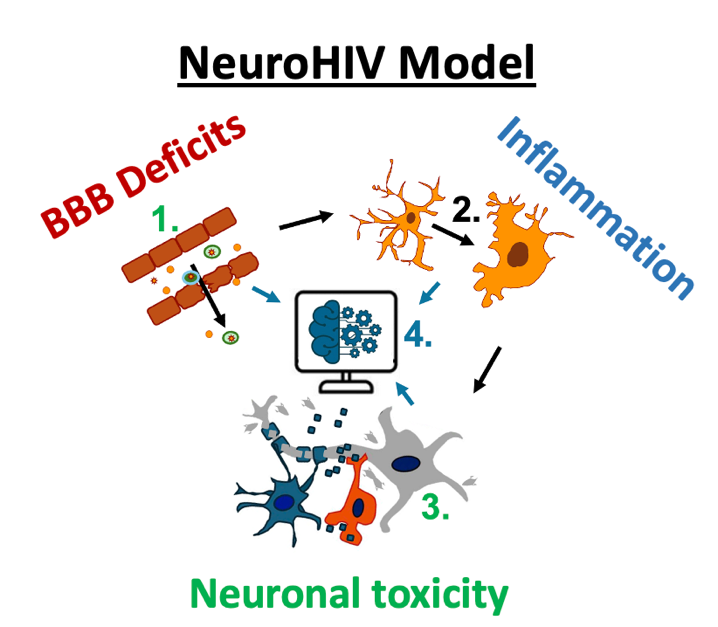
The Pedersen lab has been awarded a new NIH/NINDS/NIMH R61/R33 grant (1R61NS145289-01), entitled: “Intersection of Neuro-Immune-Vascular Dynamics in Preclinical NeuroHIV Model”, which is led by the Scintillon Research Institute, San Diego (Lead PI: Irene Munk Pedersen, PhD.), and our colleagues at Scripps Research (co-I: Sumit Chanda, Ph.D.).
Despite progress, gaps remain in understanding how systemic inflammation and local viral persistence converge to drive HIV-associated neurocognitive disorder (HAND). Unknowns include which immune cells transport HIV into the CNS, how HIV viral reservoirs persist in the brain and contributes to neuroinflammation and neuronal toxicity. Progress has been limited by the absence of human systems capturing the multicellular complexity and dynamic signaling of the neuroimmune–vascular interface. Human-relevant models are required to dissect these mechanisms, identify points of intervention, and establish how inflammatory drivers of blood-brain barrier (BBB) dysfunction and CNS toxicity translate into clinically relevant outcome measures. This project will address this bottleneck by expanding ongoing NIH- and DoD-supported studies using our 3D blood-BBB/CNS microfluidic platform integrating brain endothelial cells, pericytes, astrocytes, microglia, oligodendrocytes, neurons and peripheral immune cells, that capture neuroimmune–vascular communication. Coupled with high-resolution imaging, multi-omic profiling, and AI analytics, these models will map BBB deficits, immune-cell trafficking, neuroinflammation and loss of neuronal dynamics at single-cell resolution. The project fosters an integrated, multidisciplinary approach that promises to make significant strides in our understanding and treatment of BBB and CNS dysfunction in people living with HIV and the broader community of patients with neurodegenerative disorders.